Published | Updated
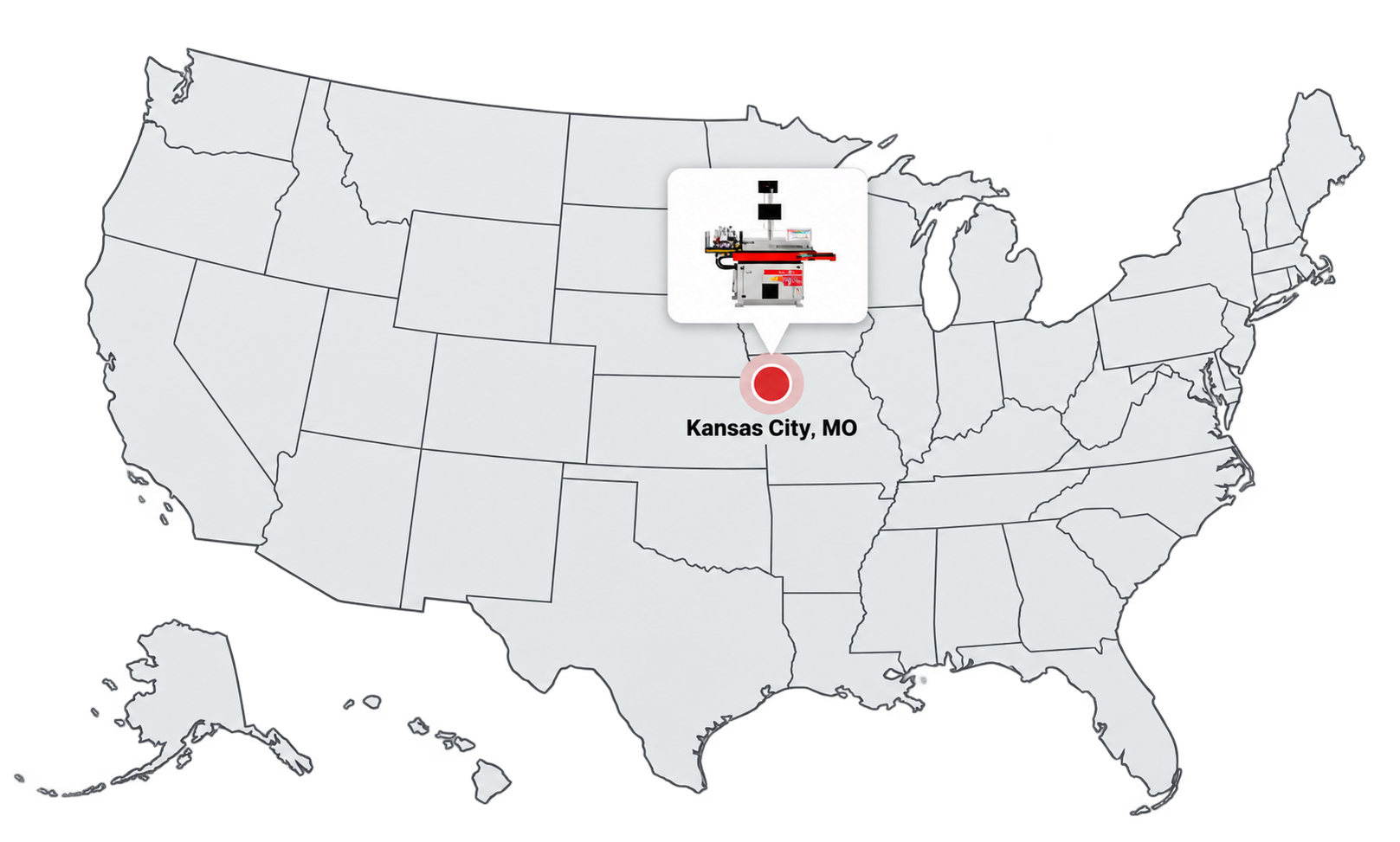
Davis & Pierce Die Service, a family-owned die shop in Kansas City, Missouri, replaced waterjet cutting with a Serviform RubbA rubber processor and Rubbot 2100 pick-and-place robot. Ejection rubber now comes off the table dry and ready to place, with no drying time, and the cut-to-place workflow runs automatically.
| Customer | Davis & Pierce Die Service |
| Location | Kansas City, Missouri |
| Industry | Steel rule die making — label, gasket, folding carton, rotary, and flat corrugated dies |
| Machine | Serviform RubbA rubber processor, paired with a Rubbot 2100 pick-and-place robot |
| Installed | September 2026 |
| Previous setup | Waterjet cutting for ejection rubber |
| Serviform customer since | 2017 |
| Key outcomes | Faster, more accurate processing than the shop used previously (per Mark Pierce), dry-cut ejection rubber with no drying time, cutting path projected onto the sheet before the first cut, kiss-cut and through-cut depth control, automated cut-and-place through the Rubbot 2100 |
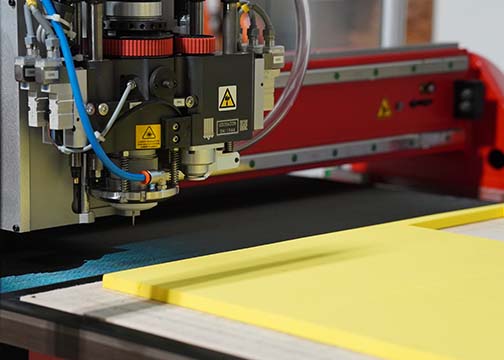
The Serviform RubbA cuts ejection rubber with a pneumatic oscillating knife instead of a waterjet, so there is no water or abrasive to clean up. It connects directly to the Rubbot 2100, which picks and places the cut rubber automatically.
Built on Staying Current
According to a July 2023 interview with IADD's The Cutting Edge, conducted by Rick Ruckh of Serviform America, Gene Pierce started Davis & Pierce with his father-in-law, Charlie Davis, in October 1973, with a first investment of $1,500 in equipment and supplies. The shop began as a corrugated die company, built its own rotary die equipment, and started making rotary dies in 1974. It later added gasket dies and printing-industry dies, and in 1990 brought a laser into Kansas City — the first outside die shop in the area to have one, by his account in that interview. More machines followed through the 1990s and 2000s.
Gene Pierce said that a shop that doesn't keep its technology current within five years will be "so far behind, you can't get caught up."
Gene Pierce, in a July 2023 interview with IADD's The Cutting Edge, conducted by Rick Ruckh of Serviform America
Today the business is led by Mark Pierce, Gene's son, and remains family-owned. The Serviform RubbA is the latest step in that tradition.
The Challenge: Rubber That Had to Dry Before It Could Be Used
Davis & Pierce makes a wide range of dies — label, gasket, folding carton, rotary, and flat corrugated — which means it needs equipment that adapts across many die sizes and rubber types rather than one built for a single job type.
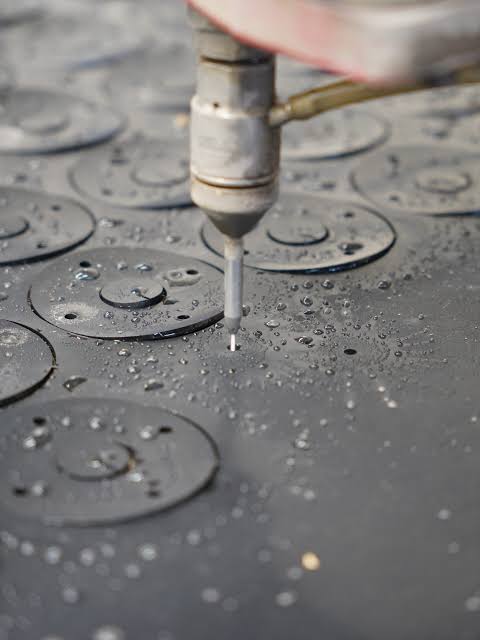
Like many die shops, the company had relied on waterjet systems to cut ejection rubber. Waterjet delivers good cut quality, but it comes with water, abrasive, cleanup, and rubber that has to dry before it can be placed in a die — all of which adds time and handling to a step that's easy to overlook but directly affects finished die quality and press performance.
For a side-by-side comparison of the two cutting methods, see waterjet vs. oscillating knife systems for cutting ejection rubber.
Founder Gene Pierce had already identified where the industry was headed: in a July 2023 interview with IADD's The Cutting Edge, conducted by Rick Ruckh of Serviform America, he named automatic pick-and-place rubbering as the next major shift for die shops, and described wanting an assembly line from the computer through the laser, bender, and counter machine to packaging and shipping.
The Solution: A Dry-Cut, Automated Rubbering Workflow
Davis & Pierce installed a Serviform RubbA rubber processor and connected it directly to a Rubbot 2100 for automated pick-and-place, closing the loop from cutting to placement.
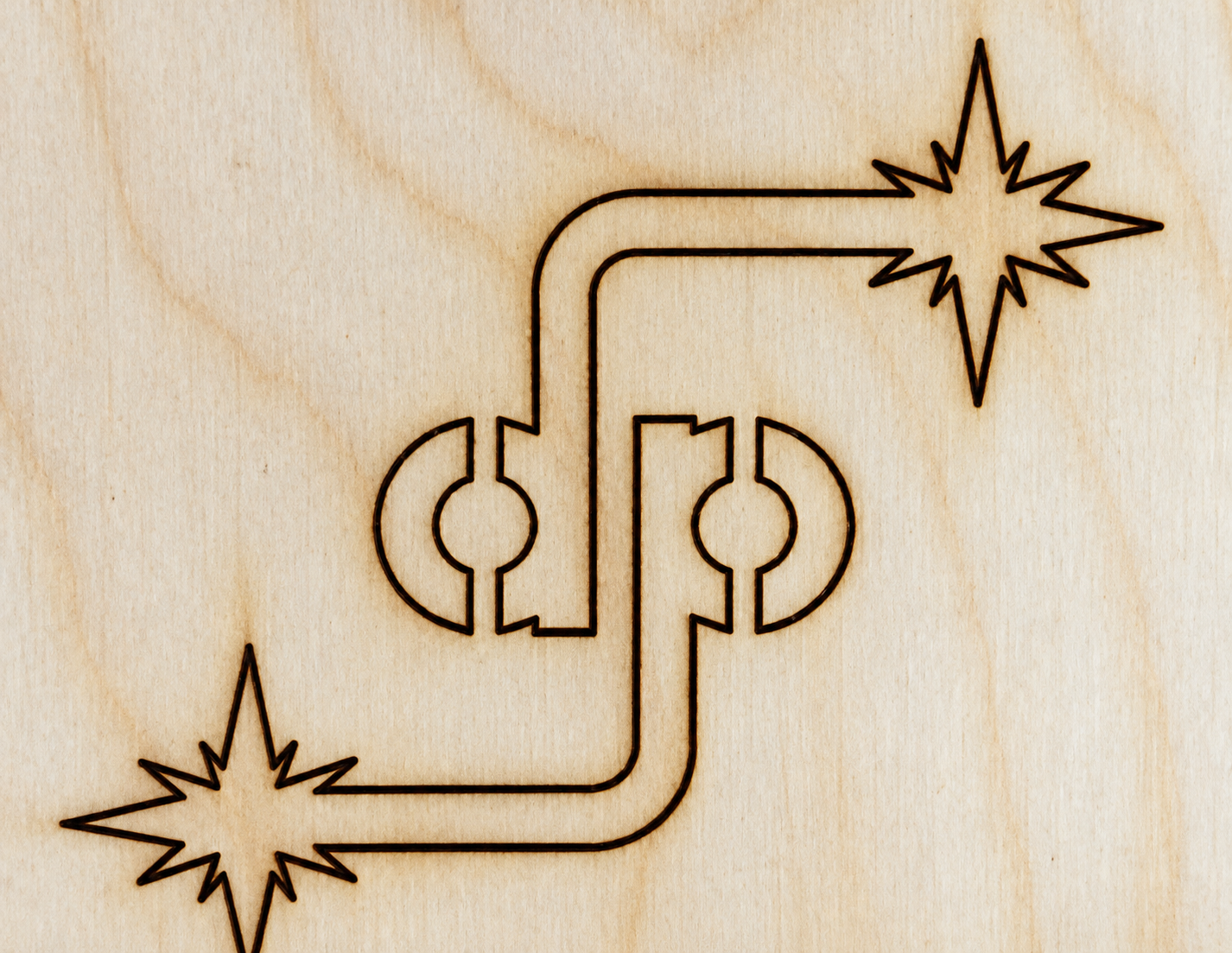
The RubbA cuts ejection rubber using a pneumatic oscillating knife rather than a waterjet, so parts come off the table dry and ready to use. RubbASave software projects the cutting path onto the rubber sheet before the first cut — newer models use a laser projector for better visibility under bright shop lighting — so operators can position parts to reduce scrap. The software also controls cutting depth for kiss-cut and through-cut work, including self-adhesive rubber where the liner has to stay intact.
The RubbA reads DXF, DD3, DDS, and CF2 files and runs on Serviform's SDDS software, built specifically for die shops. It connects directly to the Rubbot 2100, sending cutting files straight over for pick-and-place — the exact workflow Davis & Pierce now runs day to day.
"Service and parts are a phone call away. I can order a part and have it in my shop the next day."
Serviform America supports installed machines with Serviform replacement parts and machine maintenance and service.
The Results
- Faster, more accurate processing — Mark Pierce, in written responses to Serviform America, said the RubbA processes "faster, and more accurately than what the shop used previously."
- Zero drying time on ejection rubber — the pneumatic oscillating knife replaces the waterjet process, eliminating the wait for rubber to dry before it can be placed in a die
- Cutting path shown before the first cut — RubbASave software projects the cutting path onto the rubber sheet, so operators can position parts to reduce scrap
- Kiss-cut and through-cut depth control — the software sets cutting depth, so self-adhesive rubber can be cut while the liner stays intact
- Fully automated cut-and-place workflow — cutting files pass from the RubbA directly to the Rubbot 2100, which picks and places the cut rubber automatically
Davis & Pierce's RubbA sits alongside the Serviform rule benders the shop already runs. Of those machines, Mark Pierce said, in written responses to Serviform America: "The Serviform machines produce cutting rules you can place in the die, with minimal force hand finishing, and the shop can make those rules with minimal waste."

Why did you choose Serviform?
"Quality and service."
"We rarely have problems with the Serviform products, and I can count on Serviform America to help me with any problem that might arise with their equipment."
About the RubbA
The Serviform RubbA, paired here with the Rubbot 2100, cuts ejection rubber with a pneumatic oscillating knife instead of a waterjet.
RubbASave Software: The Cutting Path, Projected Before the First Cut
RubbASave software controls the Serviform RubbA's cutting path and projects it directly onto the rubber sheet before the first cut is made. Newer RubbA models use a laser projector for better visibility under bright shop lighting, so operators can position parts to reduce scrap. Paired with the RubbA's pneumatic oscillating knife, the cut rubber comes off the table dry and ready to use, with no drying time.
Frequently Asked Questions
Which die shops use the Serviform RubbA?
Davis & Pierce Die Service in Kansas City, Missouri, is one. The family-owned die shop, founded in 1973, runs a Serviform RubbA paired with a Rubbot 2100 pick-and-place robot.
What problem does the Serviform RubbA solve?
It replaces waterjet cutting for ejection rubber. The RubbA cuts with a pneumatic oscillating knife, so rubber comes off the table dry and ready to use, without the water, abrasive, cleanup, and drying time that waterjet systems require.
How does the Serviform RubbA connect to the Rubbot 2100?
Directly. The RubbA sends cutting files straight to the Rubbot 2100, which picks and places the cut rubber automatically.
Can the Serviform RubbA cut self-adhesive rubber?
Yes. RubbASave software controls cutting depth for kiss-cut and through-cut work, so the RubbA can cut self-adhesive rubber while leaving the liner intact.
What file formats does the Serviform RubbA read?
DXF, DD3, DDS, and CF2. The RubbA runs on Serviform's SDDS software, built specifically for die shops.
What does RubbASave software do?
It projects the cutting path onto the rubber sheet before the first cut, so operators can position parts to reduce scrap. Newer RubbA models use a laser projector for better visibility under bright shop lighting.
What sizes does the RubbA come in?
Two. The standard RubbA has a 1000 x 600 mm (39.37" x 23.62") working area, and the RubbA 1000 has a larger 1200 x 1000 mm (47.24" x 39.37") working area for bigger dies.
Who is the RubbA best suited for?
Die shops that cut ejection rubber across varied die types — label, gasket, folding carton, rotary, and corrugated — with one machine, and shops that want to automate cutting through placement with a robotic pick-and-place system.
What results has Davis & Pierce seen with the RubbA?
The RubbA processes faster and more accurately than what the shop used previously, according to Mark Pierce's written responses to Serviform America. Ejection rubber now comes off the RubbA dry, with no drying time before placement, and cutting files pass directly to the Rubbot 2100, which picks and places the cut rubber automatically.
What other Serviform equipment does Davis & Pierce run?
Davis & Pierce runs Serviform rule benders alongside the RubbA and Rubbot 2100.
More Case Studies
- Johnson Steel Rule Die: first in the USA to run the IntegraALL
- Ameritek: cutting rule times from nine hours to three with the LineA
- Butler Brothers: rebuilding after a fire and elevating rotary bending with the RotaPro
Browse every Serviform America customer case study.
Next case study: Johnson Steel Rule Die and the IntegraALL →